
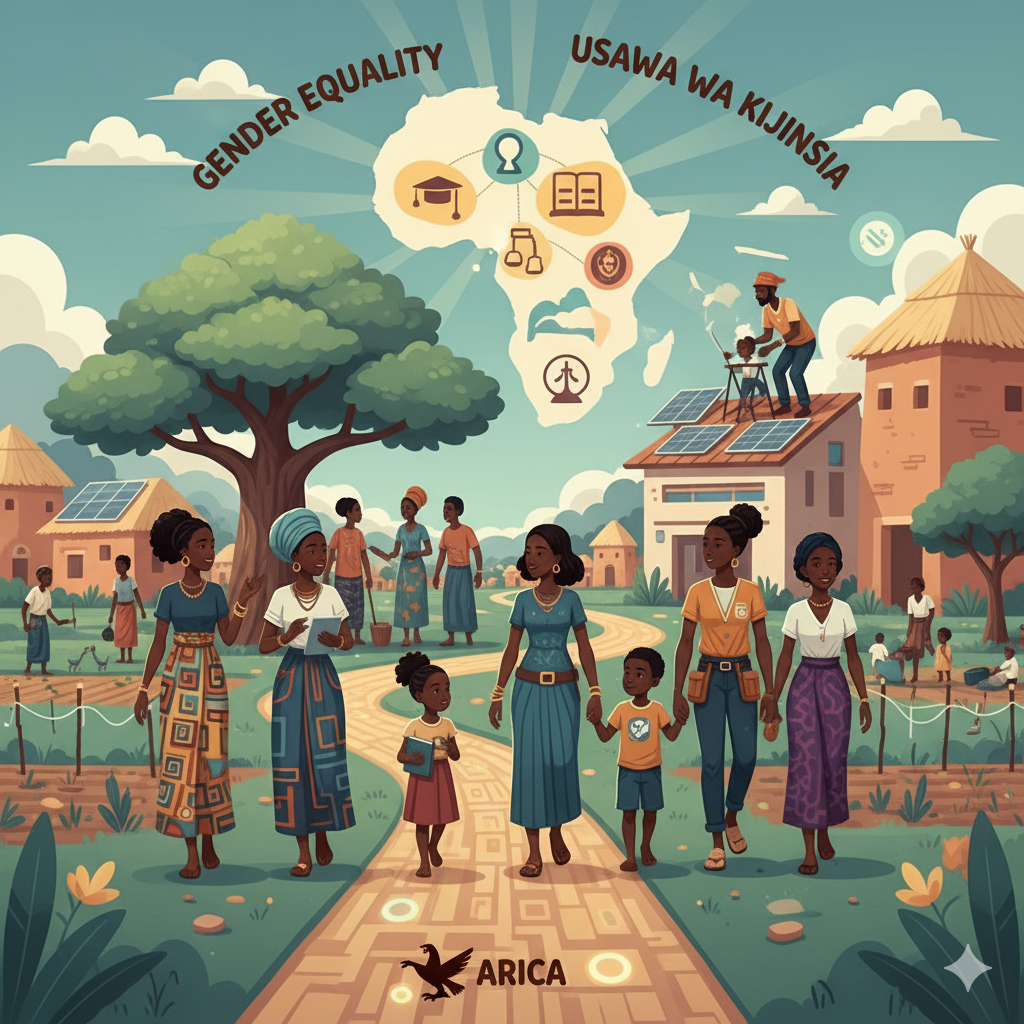
In many African communities, people often say, “If you educate a woman, you educate a nation.” Across the continent, from rural villages to growing cities, women and men work side by side in markets, farms, schools, and homes. Yet society does not always offer them equal opportunities. Although Africa celebrates rich culture, resilience, and strong community bonds, it continues to wrestle with questions of fairness between genders. This reality makes gender equality a critical issue. (United Nations, 1948; African Union, 2003).
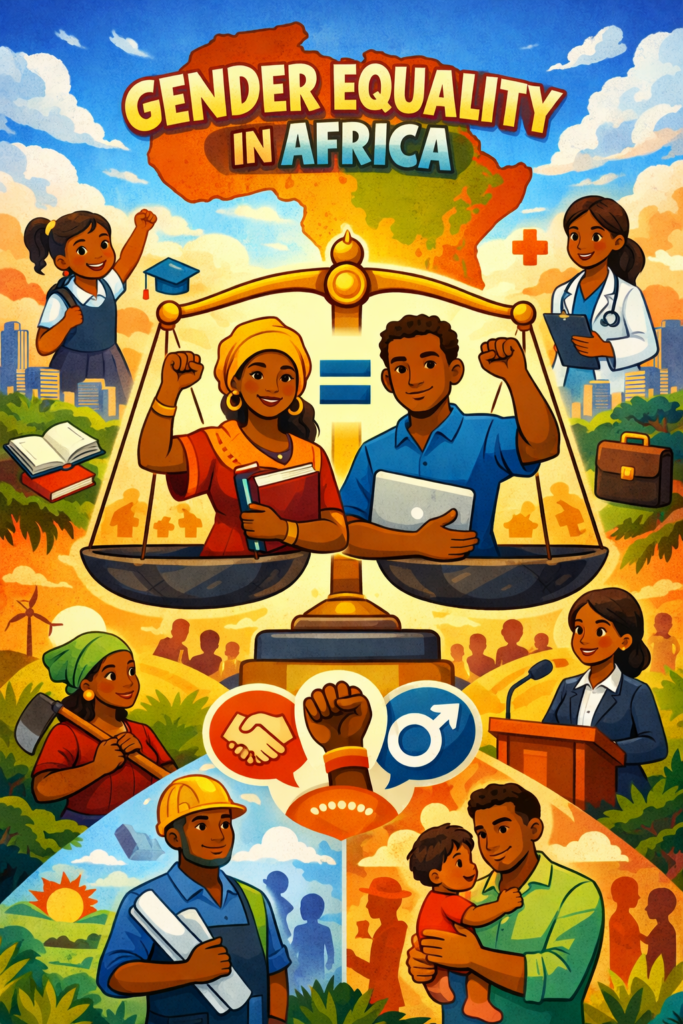
Definition of Gender Equality
Gender equality means that people of all genders enjoy equal rights, responsibilities, and opportunities. It ensures that gender does not determine access to education, employment, healthcare, leadership, or justice. Gender equality promotes fairness and equal treatment rather than forcing everyone to become the same. (UN Women, 2022).
In the African context, gender equality acknowledges both tradition and change. Many societies value strong family systems and cultural heritage. However, some traditional practices have limited opportunities for women and girls, especially in higher education, property ownership, and political leadership. Gender equality works to remove these barriers while preserving positive cultural values such as community support and shared responsibility. (United Nations, 1948; African Union, 2003).
Gender equality also empowers women and girls to reach their full potential while encouraging men and boys to participate actively in caregiving, emotional expression, and shared decision-making. When women and men contribute equally to social, economic, and political life, communities grow stronger and more resilient.
Simply put, gender equality gives every child, girl or boy, the same chance to dream, grow, and succeed. This idea does not come from outside Africa. African values of fairness, dignity, unity, and collective progress firmly support it.
Understanding Gender Equality in the African Context
Many people frame gender equality in Africa as a conflict between tradition and modernity. This view oversimplifies the issue. The real conversation centers on the negotiation of how societies preserve identity while confronting inequality that limits human potential.
Across Africa, families, economic systems, religions, and community leadership structures shape gender roles. Many communities view men as providers and decision-makers, while they expect women to nurture, care, and manage households. These roles go beyond practicality; they define respect, responsibility, and belonging.
When discussions on gender equality arise, some people interpret them as attacks on culture, while others see them as necessary corrections to injustice. The tension often emerges from misunderstanding intentions rather than rejecting fairness itself.
African societies have always evolved. Pre-colonial histories reveal complex gender systems in which women-controlled markets, advised kings as queen mothers, and held spiritual authority. (Amadiume, 1987). Colonial administrations later imposed legal and property systems that favored men and restricted women’s public roles. (Oyěwùmí, 1997). Many practices that people now call “tradition” actually reflect a blend of indigenous customs and colonial restructuring.
Understanding this history challenges the idea that gender inequality is permanent or purely cultural. African societies have always adapted to change.
However, change rarely occurs smoothly. Consider land ownership. In many rural communities, women farm the land while men hold legal ownership. Legal reforms can strengthen women’s economic security, but laws alone cannot transform deeply held beliefs about property control. Even when the law protects a widow’s rights, social pressure may force her to surrender land to male relatives. The law speaks one language; custom speaks another.
Negotiation becomes essential here. Community dialogue, engagement with traditional leaders, and practical demonstrations of benefits often create more progress than confrontation alone. When families see educated daughters contribute financially and when men experience the benefits of shared decision-making, attitudes begin to shift.
Balancing Rights and Respect
One of the most sensitive issues in gender equality is balancing universal human rights with cultural respect. Human rights frameworks often focus on individual freedom, while many African societies value community, family bonds, and collective responsibility. When advocates promote rights solely as individual issues, communities might see them as threats to social harmony.
The challenge does not require choosing between rights and respect. Dignity demands both. Respecting culture does not mean preserving harmful practices, and promoting rights should not dismiss deeply held beliefs. Sustainable change occurs when reforms strengthen communities rather than weaken them.
For example, campaigns against child marriage succeed more often when they highlight health outcomes, economic stability, and long-term family benefits instead of relying solely on legal punishment. Advocacy for women’s inheritance rights gains traction when it emphasizes family security and poverty reduction. (World Bank, 2022). These approaches shift the conversation from confrontation to shared interest.
Listening also plays a critical role. Women within communities understand cultural complexities better than external actors. Their voices help shape reforms that align principles with practicality.
Maintaining this balance requires care. Excessive cultural relativism allows injustice to persist, while rigid rights discourse can provoke resistance. Dialogue, patience, and partnership offer the most effective path forward.
Education quietly drives transformation. When a girl completes secondary school, she delays marriage, earns income, and participates in civic life. Her education also reshapes how her family and community perceive women’s capabilities.
Urbanization further reshapes gender norms. In cities, households often rely on dual incomes. Women enter formal employment, start businesses, and engage in politics. Media and technology expose people to diverse lifestyles and broaden expectations. However, urban progress does not erase rural inequality, which often deepens along lines of class and access.
Religion adds another layer of complexity. Faith communities influence social norms across Africa. Religious interpretations often shape gender expectations, yet faith leaders have also championed girls’ education, maternal health, and protection against violence. The same institutions may resist change in one area while promoting it in another.
Masculinity presents one of the most challenging conversations. Gender equality not only expands women’s rights; it also reshapes ideas about manhood. In contexts where men link identity to authority or sole financial provision, economic hardship intensifies fear and resistance. Addressing gender equality without acknowledging male anxiety often deepens opposition.
The negotiation, therefore, moves beyond old versus new. It becomes a negotiation between fear and possibility.
Gender-based violence highlights this tension clearly. Many countries now have laws against domestic violence and child marriage. However, shifting attitudes about power and discipline within families determine enforcement. Silence often protects abusers more effectively than laws protect survivors. Breaking that silence requires courage, community support, and visible accountability.
Gender Equality vis-à-vis the “Single Story.”
Viewing people through a single lens creates danger. (Adichie, 2009). When societies tell only one story about women and men, they reduce individuals to stereotypes. Women often appear as gentle caregivers, while men appear as dominant leaders. These narrow narratives limit choices and potential.
Accepting a single story makes inequality easier to justify. If society defines women solely as caregivers, leadership exclusion appears normal. If society defines men only as providers, caregiving becomes suspect.
Gender equality challenges the single story. It affirms that women can lead, innovate, govern, and create, just as men can nurture, teach, and express emotion. It recognizes that gender does not determine ability or ambition.
When communities share multiple stories, change begins. Girls who see women in politics or engineering imagine broader futures. Boys who see men engaged in caregiving redefine masculinity.
Gender equality, at its core, allows many stories to exist. When societies hear many stories, fairness becomes a lived reality rather than an abstract principle.
People must also resist a single story about Africa. Some African countries lead globally in women’s parliamentary representation, corporate leadership, and academia. At the same time, millions of women still face barriers to education, healthcare, and economic independence. Progress and inequality coexist.
What Does Negotiating Change Really Mean?
Negotiating change in gender equality means working through resistance, tradition, and fear to create fairer systems and relationships. Change does not happen instantly. It unfolds through dialogue, advocacy, compromise, and sometimes conflict. The Maputo Protocol affirms women’s rights within African legal frameworks (African Union, 2003).
Societies cannot import equality as a finished product. They must shape it within local realities. Negotiation involves engaging elders, listening to youth, and recognizing that culture evolves rather than remains frozen in time.
Gender roles draw strength from history, religion, family structures, and social norms. Changing them requires more than passing laws; it demands conversation at every level.
At home, negotiation may involve couples redistributing housework and childcare. In workplaces, it may require advocacy for equal pay, parental leave, safe conditions, and leadership opportunities. At national and community levels, it often involves debates on laws, education reform, and protections against gender-based violence.
Negotiating change also requires addressing fear. Some worry that gender equality threatens tradition or identity. Open dialogue helps clarify that equality expands opportunity rather than diminishes anyone’s value.
Ultimately, societies must shift the question. Instead of asking whether gender equality fits African culture, they should ask what kind of future they want to build. A future that limits talent by gender, or one that nurtures every child’s potential?
Gender equality in Africa does not come from outside. It grows from listening, challenging harmful norms, finding common ground, and steadily building societies where gender no longer limits possibilities.
……………………..
MARVELLOUS AKINWUMI
FIAE Head of Unit Gender Equality